Metal Buildings Insulated From the Inside Out
Commercial spray foam insulation in Versailles for agricultural, shop, and storage structures where conventional insulation leaves air gaps along the metal skin
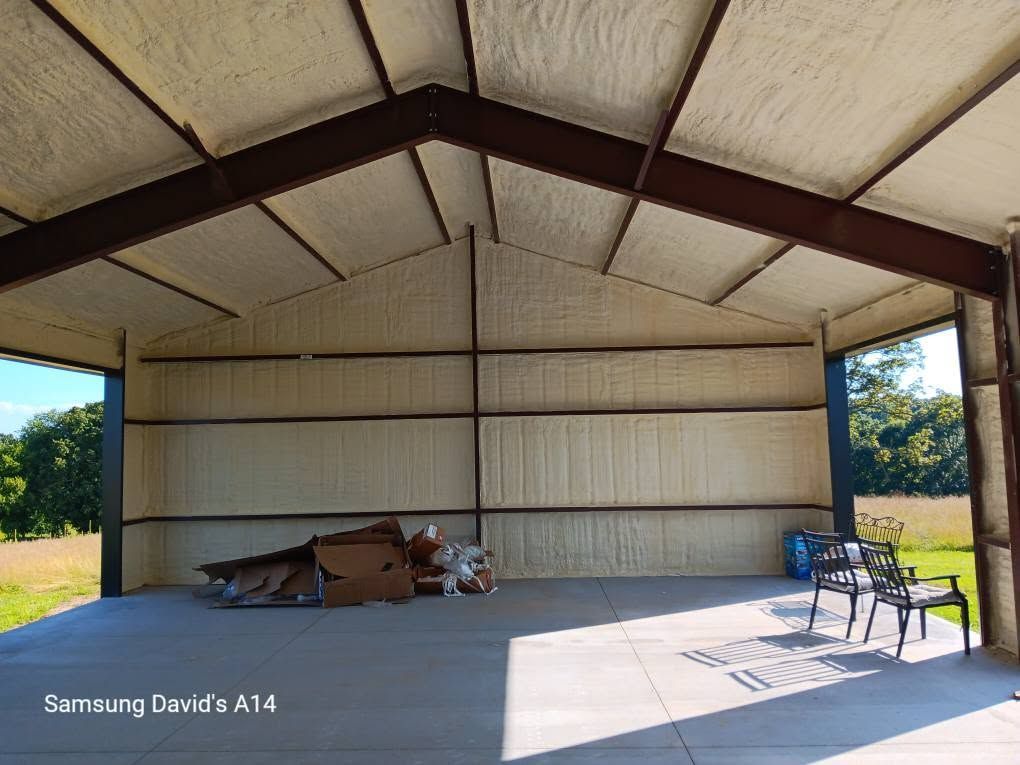
Metal buildings, shops, and agricultural structures throughout the Versailles area share a common insulation problem: the metal skin conducts temperature directly, and any loose or batt insulation laid against it without an air seal still allows air to move through the gaps around panels, fasteners, and framing members. Spray Foam Done Right provides commercial spray foam insulation for these non-residential structures, with the owner running each job directly alongside two subcontractors rather than delegating commercial work to a separate crew. That structure means the decision-making on foam type, thickness, and surface prep stays with someone who has been working in the trade since 1998.
A commercial job begins with a full walk-through of the building to measure the space, identify where air is infiltrating, and confirm the foam type and thickness required for each area before any material is mixed. Walls and roof decks are not always treated the same way — roof deck applications typically require a higher R-value and may need a specific foam density to handle the load requirements of the metal panels above. Those decisions are documented during the walk-through so the bid and the actual application match.
Request a commercial walk-through to measure the building and identify the right foam specification for each surface.
What Proper Commercial Spray Foam Application Requires
Applying spray foam to a metal building wall or roof deck is a sequenced process: the surface temperature of the metal must be within the range the foam chemistry requires for proper adhesion and cell formation, and the application passes need to be built up in the correct lift thickness to avoid heat buildup that can compromise the foam's structure. On commercial jobs with large surface areas, that means the crew works in sections and monitors the substrate conditions throughout rather than applying the full thickness in a single pass over an entire wall.
Once the foam is fully cured, the interior surface of the metal building stops acting as an exposed radiator. Condensation that previously formed on the inner face of uninsulated metal panels — a common issue in agricultural and storage buildings in this region — is eliminated because the foam creates a thermal break between the metal skin and the interior air. The work area is cleaned up after application, and Spray Foam Done Right inspects the finished surface before leaving the site.
Commercial applications also involve confirming whether the foam requires a thermal barrier covering under the applicable building code, particularly in occupied structures. A spray foam surface left exposed in an occupied commercial space typically requires a thermal barrier such as gypsum board over it, and that requirement is identified during the initial walk-through so the overall project scope is accurate from the start.
Common Questions About Commercial Foam Work
The questions below address how commercial spray foam insulation is scoped, applied, and inspected. Metal building and agricultural structures in the Versailles area present specific surface and access conditions that differ from residential work, and those differences come up frequently during project planning.
How is a commercial spray foam job scoped differently from a residential one?
The walk-through for a commercial building includes measuring total square footage by surface type, identifying mixed-use areas where different foam densities may apply, and confirming whether a thermal barrier is required over the foam under the applicable code for that occupancy type.
What foam type is typically used on the walls and roof deck of a metal building?
Closed-cell foam is the standard choice for metal building applications because its rigidity adds structural contribution to the panel assembly and its low vapor permeance prevents moisture from migrating through the insulation layer toward the interior.
Why does lift thickness matter when spraying foam on large commercial surfaces?
Spray foam generates heat as it cures, and applying too thick a single pass can cause the interior of the foam to overheat, which produces voids and reduces the achieved R-value; commercial jobs are applied in controlled lifts to avoid that failure mode.
What does the crew clean up after a commercial spray foam job?
Overspray on surfaces not intended to be foamed — floors, mechanical equipment, doors — is removed before the crew leaves, and any masking applied to protect those surfaces is stripped as part of the standard close-out.
How do you verify the foam thickness meets the specified R-value after the job is complete?
The installer uses depth probes during application to confirm the foam has reached the target thickness, and the cured surface can be spot-cored after the fact if a third-party inspection is required by the building owner or a lender.
Spray Foam Done Right also performs commercial spray foam insulation in Osage Beach, Jefferson City, Sedalia, Lebanon, and Boonville. To set up a building walk-through and receive a detailed commercial estimate, call (573) 216-8500.