
Floors Above Open Crawl Spaces Need Proper Sealing
Crawl space spray foam insulation in Versailles for homes with open foundations where cold air contacts the floor system directly
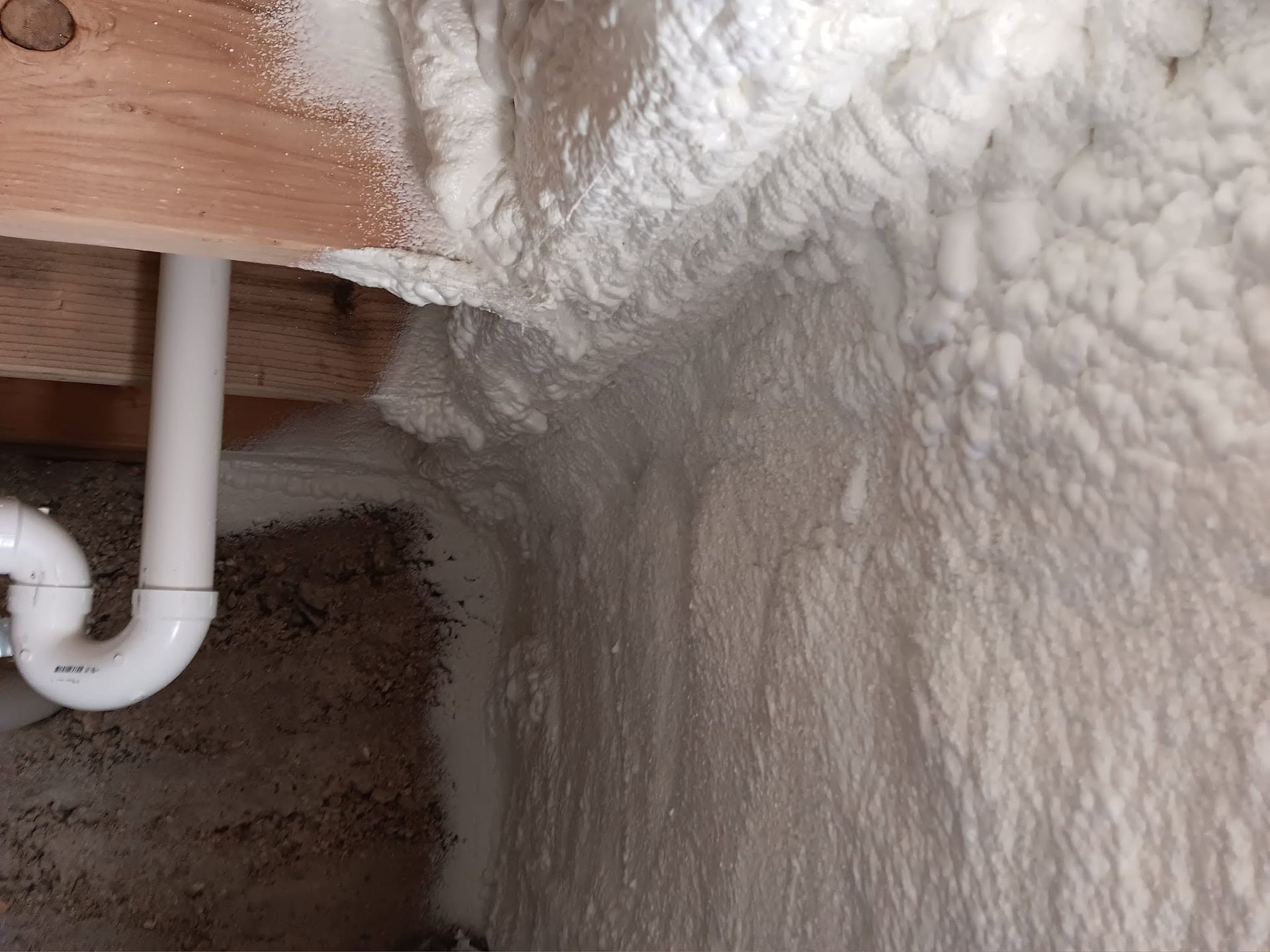
Many older farmhouses and rural homes across Morgan, Miller, and Camden County were built on open crawl spaces where the floor joists and rim joists are exposed to outside air on all sides. Spray Foam Done Right insulates these crawl spaces in Versailles using closed-cell spray foam applied to the crawl space walls and rim joists, closing the gaps through which the house loses conditioned air at the floor level. The rim joist area — where the floor framing meets the foundation wall — is often the single largest air leakage point in homes built on this type of foundation.
Every crawl space job starts with an inspection of the walls, rim joists, vents, and any visible moisture before foam is applied to anything. The crew needs to confirm the surface is dry and clean because closed-cell foam applied over a damp substrate can trap moisture against the wood framing, which is a worse outcome than leaving the space open. Once the inspection is complete and any moisture concerns are addressed, the crew seals the rim joists first, then works across the crawl space walls to close the remaining gaps the house is leaking through.
Arrange an on-site inspection so the crawl space conditions can be evaluated and the appropriate foam application can be scoped accurately.
Why Rim Joists and Crawl Space Walls Are Treated Differently
The rim joist sits at the top of the foundation wall and connects the floor framing to the structure above. Because it is framed with wood that runs in multiple directions and is interrupted by floor joists at regular intervals, it cannot be insulated effectively with batts alone — the irregular geometry leaves gaps at every joist bay. Spray foam conforms to the actual surface geometry, filling those irregular cavities and adhering directly to the wood and concrete surfaces without requiring a separate air barrier membrane behind it.
After the rim joists and crawl space walls are sealed, the floor above stops acting as a cold surface in the rooms above the foundation. Pipes running through the crawl space are no longer exposed to the same temperature differentials, and the floor itself tends to feel noticeably more consistent underfoot. For homes in Versailles with hardwood or tile floors that previously felt cold in cooler months, the change in floor temperature is typically the most immediately noticeable result.
Not every crawl space is a candidate for the same application. Vented crawl spaces that are being converted to conditioned spaces may require the existing foundation vents to be closed as part of the process, and that step involves confirming the local building code requirements for the conversion. Spray Foam Done Right evaluates these conditions during the initial inspection so the job scope is accurate before foam is ordered.
Answers About How Crawl Space Work Gets Done
The questions below address how crawl space spray foam insulation is actually performed, what the inspection process involves, and what clients should check once the work is finished. Properties in the Versailles area with older farmhouse foundations often present specific conditions that affect how the work is sequenced.
What does the inspection before spray foam application look for in a crawl space?
The crew checks the rim joists, foundation walls, existing vents, and any visible standing water or moisture staining on the wood framing, because foam should not go over wet or actively deteriorating surfaces.
Why is closed-cell foam used on crawl space walls rather than open-cell foam?
Closed-cell foam achieves a higher R-value per inch in the limited depth available on a foundation wall and resists vapor transmission, which matters in a below-grade environment where moisture can move through concrete under pressure.
How do existing foundation vents factor into a crawl space insulation job?
If the design converts the crawl space to a conditioned, unvented assembly, the vents are sealed as part of the job; leaving them open while insulating the walls would undermine the thermal boundary the foam is meant to create.
What should you check in the crawl space after the foam is applied?
The foam surface should cover the rim joists and walls continuously without gaps at corners or joist bays, and the depth should be consistent enough to meet the specified R-value across the entire treated area.
How does the construction era of a home in this area affect a crawl space insulation job?
Homes built before the 1970s in rural Morgan and Miller County frequently have unlined crawl spaces with no vapor barrier on the soil, which means a ground cover assessment is part of the job scope before foam is applied to the walls.
Spray Foam Done Right also performs crawl space spray foam insulation in Osage Beach, Jefferson City, Sedalia, Lebanon, and Boonville. To schedule an inspection of your crawl space and get a free estimate, call Spray Foam Done Right at (573) 216-8500.