Walls That Are Boarded and Finished Right
Drywall installation in Versailles for new builds, remodels, and post-frame interiors where foam-insulated walls need to be properly prepped before board goes up
Post-frame buildings and barndominium conversions have become a common project type in the Versailles area, and they share a finishing challenge that standard residential remodels do not: spray foam gets applied to the interior wall cavities first, and if that foam is not trimmed flush to the framing before drywall is hung, the board will rock, the seams will crack, and the finish work will never sit flat. Spray Foam Done Right is a Versailles contractor whose owner has been working in remodeling since 1998, and the crew handles drywall installation as a direct continuation of foam work so the two phases are coordinated from the start. Homeowners and builders who need interior walls and ceilings taken from bare framing to finished surface get that work handled by the same crew that knows exactly what the substrate looks like.
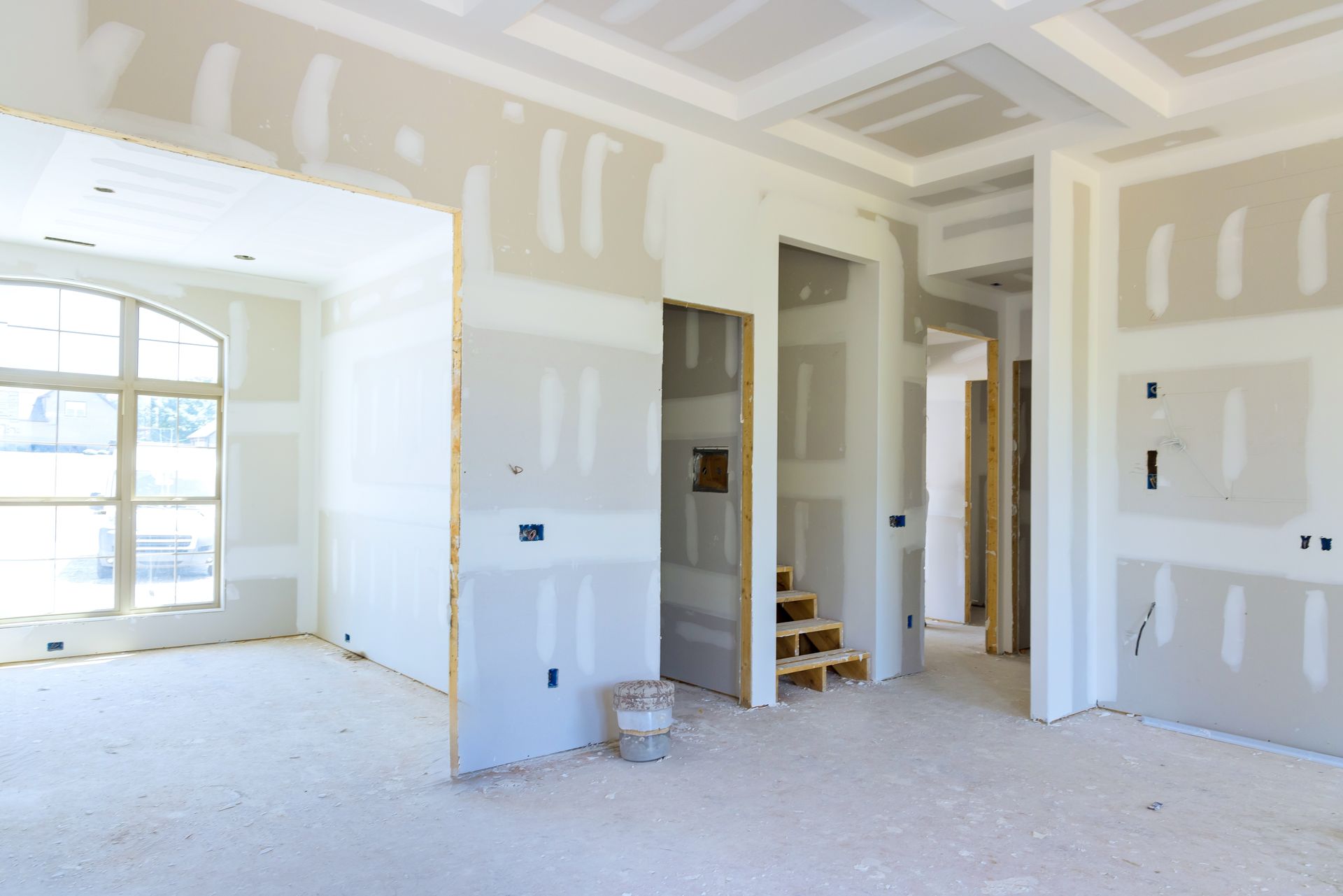
The process begins with measuring and cutting sheets to fit the framing layout, then hanging, taping, and finishing the joints through to a surface that is ready for paint or texture. Where spray foam is already present, the crew trims the foam flush before any board goes up—a step that matters because proud foam creates a soft spot behind the panel, and a soft spot behind the panel means the fasteners cannot pull the sheet tight to the stud. Skipping that prep step is a common shortcut on barndominium builds where multiple trades are moving fast; catching it before the board goes on is what separates a clean finish from one that needs repair within the first year.
Arrange a walkthrough of your framing or current project stage to get a clear scope of the drywall work involved.
How Drywall Work Gets Done Correctly
Hanging drywall in a post-frame or converted agricultural building involves decisions that do not come up in a standard subdivision build. Ceiling heights in barndominiums often run taller than the 9-foot standard, which affects sheet orientation, lift logistics, and how joints are positioned relative to the framing bays. The crew at Spray Foam Done Right accounts for those variables at the measuring stage so cuts are made to minimize waste and joints land where they can be properly backed.
Once the boards are hung and fastened, the taping and finishing process moves through multiple coats—each coat feathered wider than the one before it to create a seam that blends into the surrounding surface. What you notice when the work is done is a wall plane that reads flat under a raking light source, with no ridges, bubbles, or visible tape edges. That flatness is the indicator that each coat was allowed to dry properly and was sanded before the next was applied, not rushed.
The scope of work includes hanging, taping, and finishing to a paint-ready surface. Decisions about texture, if any is required, are made based on the application—smooth finishes are appropriate in living areas while knock-down or skip-trowel may be specified for utility or shop spaces. Those choices affect how the finish coats are applied and how the wall responds to lighting in the finished room.
What Property Owners Ask About the Work
The questions below address how drywall installation actually proceeds, particularly in the new construction and conversion projects common in this part of Missouri.
Why does spray foam need to be trimmed before drywall is hung?
Spray foam expands past the face of the framing during application, and any portion that sits proud of the stud keeps the drywall sheet from making full contact with the framing. That gap causes the panel to flex under fastener pressure, which leads to popped screws and cracked seams after the finish coat dries.
How is the taping stage different from the finishing stage?
Taping embeds the joint tape into the first coat of compound to bridge the seam mechanically, while the finishing coats that follow are applied in progressively wider and thinner layers to make that seam invisible. Rushing from tape to finish without letting each coat dry fully is the most common reason drywall seams telegraph through paint.
What should framing be like before drywall installation begins?
Studs and ceiling joists need to be plumb, level, and in plane with each other—any bow or twist in the framing will show up in the finished wall surface. In barndominium conversions around Versailles, post-frame structures sometimes use girts spaced for metal cladding rather than drywall, which may require additional blocking or furring before board can go up correctly.
How do ceiling heights affect the hanging process?
Taller ceilings require a drywall lift to position sheets overhead, and the joint layout has to be planned so horizontal seams do not fall at eye level where they are most visible. Sheets are typically run perpendicular to the framing members on ceilings to increase the number of fastening points and reduce sag over time.
What does a paint-ready finish level actually mean?
A paint-ready surface—commonly called a Level 4 finish—means all joints, fastener dimples, and corner bead edges are coated and sanded smooth enough that a single coat of primer will not reveal ridges or shadows. Anything below that standard will show texture variation once paint is applied, especially under natural or directional lighting.
Spray Foam Done Right has completed drywall projects alongside foam work and as standalone remodel jobs for homeowners and builders since 1998, with 30 five-star Google reviews reflecting that work. Spray Foam Done Right also performs drywall installation in Osage Beach, Jefferson City, Sedalia, Lebanon, and Boonville. To get a clear picture of what your project requires, call (573) 216-8500 to schedule an on-site review of the framing and current conditions.